















How to Choose a Blender for Your Kitchen

A silky vegetable soup, a lump-free smoothie or a light batter can seem like simple results. But the difference between getting them in seconds and ending up with chunks stuck to the jug usually comes down to the machine you chose. This guide to choosing a blender is designed to help you buy wisely: a practical, good-looking piece suited to the way you really cook.
You don't need the biggest blender or the one with the most accessories. You need one that handles your recipes well, fits on your worktop and is easy to use even on rushed mornings. The right choice turns an everyday task into something comfortable and pleasant.
Choosing a blender: start with your habits
Before looking at power, programmes or finishes, think about what you'll be making most of the time. A blender is more enjoyable when its format fits your routine rather than forcing you to change it.
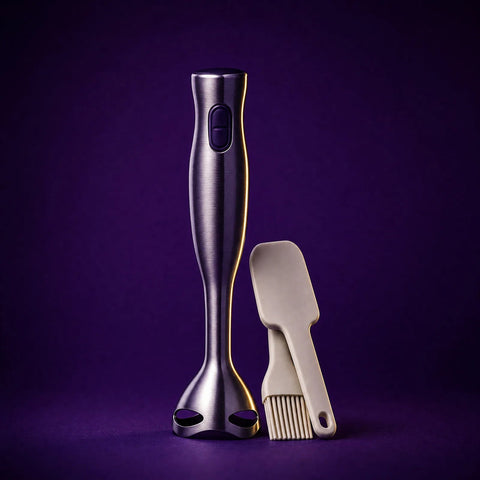
If you make purées, soups, sauces or mayonnaise right in the pot, a hand blender is a very practical option. It takes up little space, cleans quickly and gives you the freedom to work with containers of different heights. It's especially appealing for compact kitchens or for anyone who prefers to put small appliances away after using them.
If your priority is fruit smoothies, plant-based drinks, alcohol-free cocktails or chilled soups, a jug blender is more convenient. Its container lets you process larger quantities and leaves your hands free while it works. It's also a good choice for households where recipes are made for several people.
A personal blender suits a more individual rhythm. It usually comes with cups that work for both blending and drinking, a very practical solution for quick breakfasts, post-workout snacks or smoothies to go. Its limit is capacity, and it doesn't always handle very hot ingredients or dense mixtures as easily.
Finally, a food processor with a blending function can be a smart purchase if you also want to grate, slice, knead or chop. In return, you'll need more storage space and will have more parts to clean. It's best to choose it out of real need, not because of the idea of having everything in one appliance.
Power matters, but it isn't the whole story
Watts give a useful reference, although on their own they don't guarantee a better result. The design of the blades, the speed of rotation, the stability of the base and the shape of the jug all influence the outcome as much as the number on the product sheet.
For soft preparations, such as yoghurt with ripe fruit, cooked soups or light sauces, moderate power can be enough. If you often want to crush ice, nuts, fibrous vegetables or frozen fruit, look for higher power and a set of blades designed for that effort. That way you'll avoid repeating cycles, straining the motor or adding more liquid than the recipe calls for.
It's also worth telling peak power apart from sustained performance. A blender designed for short bursts of use can work very well on simple tasks, but it isn't the best choice for preparing large quantities several times a week. If you cook often, it's worth putting a reliable motor and a stable base ahead of an eye-catching figure.
Variable speed adds precision. Low speeds help combine ingredients without splashing, while high speeds let you refine textures. The turbo function is useful for giving a cream its final finish or breaking up small pieces, but it shouldn't be the only reason to buy.
Blades: the detail that changes the texture
Stainless steel blades with several tips and good height inside the jug tend to produce a more even blend. In jug blenders, a detachable blade base makes cleaning easier, although it must seal firmly to prevent leaks.
For ice or hard ingredients, look for tough blades and a jug that can withstand the impact. If you're most interested in emulsions, such as aioli, vinaigrettes or light creams, consider models that include a whisk or specific attachments. Not every blender handles every texture equally well.
The right jug for your kitchen and your recipes
The material of the jug affects comfort, upkeep and how the appliance looks in your home. Glass has an elegant presence, doesn't easily hold on to odours and usually tolerates hot ingredients well. On the other hand, it is heavier and needs a little more care when handling.
BPA-free plastic is lighter and comfortable for daily use. It's an interesting alternative if you want a unit that's easy to move around or if there are children at home. Check that it resists staining and can handle temperatures suited to your recipes, since not all plastic jugs react to heat in the same way.
Stainless steel stands out for its durability and for keeping the temperature of certain preparations better. However, it doesn't let you see inside while you blend. For some people that's no problem; for others, keeping an eye on the texture is an essential part of the experience.
As for capacity, don't buy only with the occasional guest in mind. For one or two people, a compact jug can be more convenient and quicker to clean. For a family or for batch cooking, a large jug saves you working in several rounds. Keep in mind that you shouldn't fill it to the brim, especially with hot liquids, because they need room to circulate without splashing.
Do you prepare hot ingredients?
This question deserves attention. Not every jug blender is suitable for hot liquids, and filling a closed container with a freshly boiled soup can build up pressure. If your recipes include hot soups and sauces, always confirm that the model is designed for it and use the lid according to its instructions.
A hand blender usually offers more flexibility for these preparations because it lets you blend directly in the pot. Even so, try to use a tall container and move the head gently to keep your kitchen clean.
Real convenience: cleaning, noise and storage
The best blender isn't just the one that blends well, but the one you'll want to use again tomorrow. That's why cleaning should be part of your decision. Dishwasher-safe detachable parts save time, although washing by hand straight away also protects the finish and stops residue from drying on.
On jug blenders, a self-cleaning function, or the option of blending lukewarm water with a drop of washing-up liquid, can make maintenance much easier. On hand blenders, check that the shaft comes off with a simple movement and has no areas that are hard to rinse.
Noise is another factor that often gets overlooked. A powerful motor inevitably makes sound, but solid construction and non-slip feet reduce vibration. If you make breakfast early or live in a small space, you'll appreciate a stable, well-assembled unit.
Measure the place where you plan to keep it, too. A tall jug blender may not fit under some cupboards, while a hand blender with attachments needs a generous drawer or a tidy box. Choosing a design that fits your kitchen both visually and physically makes it feel more natural to use.
Features worth having and extras you can skip
Automatic programmes for smoothies, ice or soups can be useful if you repeat those recipes often. They adjust the blending rhythm and free up your attention for a few seconds. However, they don't replace good blades or a suitable motor.
A speed control, a pulse function and a lid with an opening for adding ingredients usually bring more everyday value than a long list of programmes. The pulse function, for example, lets you control the chopping of nuts, onion or herbs better without turning them into paste.
Attachments deserve an honest review. A measuring cup, whisks for whipping or a small chopper can greatly expand the possibilities of a hand blender. But if you know you won't use them, it's better to invest in a higher-quality model with the essentials. Buying less but choosing better is also a way of looking after your kitchen.
Safety and electrical compatibility if you buy from the United States
If you live in the United States and buy an appliance designed for the European market, pay particular attention to the voltage, the plug type and the electrical frequency. In the United States the norm is 120 V and 60 Hz, while many European appliances are built for 220-240 V and 50 Hz.
A plug adapter does not convert the voltage. Using an incompatible appliance can damage it and create an unnecessary risk. Always look for clear information about electrical compatibility or a model prepared for your home's mains supply. This simple check protects your purchase and avoids surprises when it arrives.
Also, give priority to a firm base, quality materials and locking systems when it comes to jug blenders. Safety shows in small details: a lid that fits well, a cable in good condition and controls that are easy to operate with clean or slightly damp hands.
Choose a blender that makes you want to cook
The ideal purchase isn't measured by the number of functions, but by how easily it handles your favourite recipes. A compact, elegant blender that you use every day can bring more value than a complicated model that ends up at the back of a cupboard.
Choose calmly, think about your rhythm and give priority to the quality you'll feel with every use: a fine texture, easy cleaning, a carefully made design and the peace of mind of having made a safe purchase. Your kitchen deserves tools that go well with your everyday moments.