
















How to Care for Leather Boots So They Look Flawless

A well-chosen pair of leather boots can transform a simple outfit and add that touch of polished style that never goes unnoticed. But knowing how to care for leather boots is what separates a pair that stays flawless for years from one that loses its shine, dries out and warps before its time. The good news is that you don't need a complicated routine: consistency, the right products and a few minutes after each wear are usually enough.
Leather is a natural material. It has fibres, it absorbs moisture and it reacts to heat, dust and a lack of conditioning. That's why treating it like a synthetic fabric is one of the most common mistakes. Looking after it properly doesn't just protect its appearance: it also helps it keep the flexibility and comfort you expect from quality footwear.
Start by identifying the finish of your boots
Before you apply any cream, wax or cleaner, check what type of leather you're dealing with. Smooth leather boots usually respond very well to a classic routine of cleaning, conditioner and coloured cream or wax. Suede and nubuck, on the other hand, need specific brushes and dry products or formulas made for their velvety surface.
This difference is no small detail. A nourishing cream can leave dark marks on suede or make it clump, while a hard brush used carelessly can scratch delicate smooth leather. If you've kept the label or the manufacturer's instructions, check them before trying any new product. When you're not sure, always test on a hidden spot, such as the inner edge of the shaft.
It's also worth keeping metallic, embossed or specially patinated finishes in mind. With these styles, less is more: a gentle clean and a soft cloth are better than experimenting with strong formulas that could alter the colour.
How to care for leather boots after every wear
You don't need to deep-clean your boots every time you wear them, but you do need to remove surface dirt. Dust and soil act like an abrasive layer when they build up, especially in creases, seams and around the sole.
When you get home, let your boots breathe for a few minutes, then wipe the whole surface with a dry, soft microfibre cloth. If there is dried mud, use a soft-bristled brush without scrubbing hard. For isolated marks on smooth leather, dampen the cloth slightly, wring it out very well and work with gentle movements. The leather should never end up soaked.
Pay attention to the sole and the heel. Removing small bits of grit or dirt stops them from reaching the leather when you store your boots and improves stability when you walk. It's a small gesture that keeps the whole look far better maintained.
If your boots get wet in the rain
Rain doesn't automatically ruin a good pair of leather boots, but it does call for a calm, correct response. Never dry them next to a radiator, with a hairdryer or in direct sunlight. Sudden heat removes moisture too quickly, hardens the fibres and can cause cracks or warping.
Take out the laces if they have any, dry the outside with an absorbent cloth and stuff the inside with plain white paper, free of ink. Change the paper when it gets damp and let the boots air-dry in a ventilated spot at room temperature. Once they are completely dry, apply a light conditioner to restore flexibility to the material.
If you live somewhere with frequent rain or wear your boots every day in winter, a specific waterproofing protector can be a very smart purchase. Choose the product according to the finish of the leather and reapply it following its instructions. Protection reduces the risk of water stains, although it doesn't replace proper drying.
Deep cleaning: how often and with which products
How often depends on how much you wear them. Boots you wear once or twice a week may need a deep clean every four to six weeks. If you use them for long commutes, on rainy days or in very dusty surroundings, you may need to do it sooner. The aim isn't to over-treat the leather, but to step in when it stops looking clean, starts to feel dry or loses its even tone.
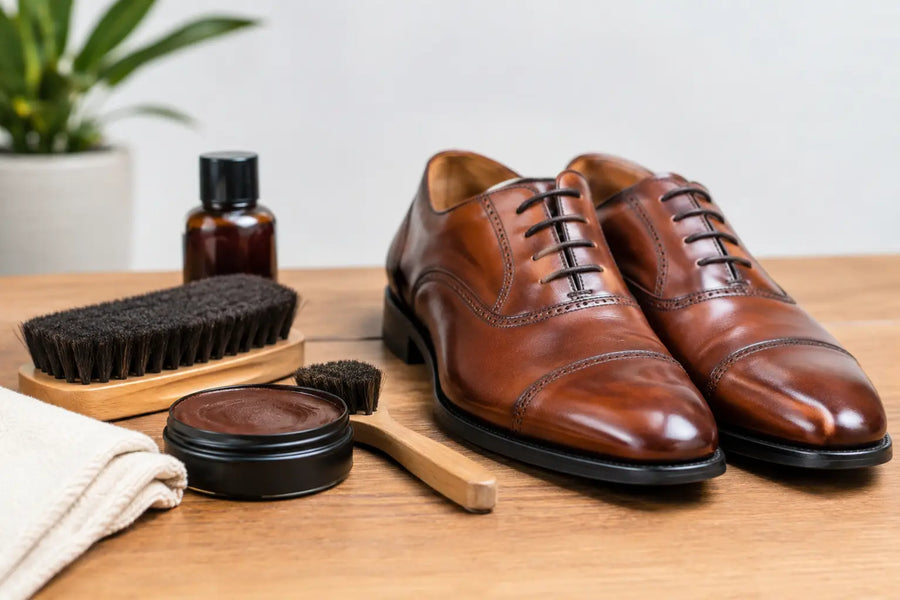
For an elegant and effective maintenance routine, you only need four basics: a microfibre cloth, a soft brush, a cleaner formulated for leather and a conditioner or nourishing cream. If you want to restore colour and shine, add a pigmented cream in the closest possible shade to your boots and a protective wax for the final finish.
First, remove the laces and any removable insoles. Brush away the dust and put a small amount of cleaner on the cloth, never directly on the boot. Work in sections without saturating the material, and let it dry for a few minutes. Then apply the conditioner in a thin layer using circular movements.
Let the product absorb before buffing. On smooth leather, a shine brush or a clean cloth helps bring back an even, sophisticated appearance. If you use a coloured cream, do so sparingly: it's useful for disguising light scuffs, but applying too much can stain the seams or transfer onto your clothes.
The right conditioning prevents cracks and stiffness
Boots don't need cream every week as a rule. Conditioning too often can leave the leather soft, sticky or with an artificial shine. The clearest sign is something you can see and feel: if the material looks dull, has very dry creases or has lost its flexibility, it's time to condition it.
In dry climates, boots may need attention more often. In humid climates, the challenge is usually controlling the drying and preventing mould. That's why the same routine doesn't work equally well for every wardrobe. Observe your boots and adjust their care to how they react to real use, not just to the calendar.
Avoid home remedies such as cooking oil, petroleum jelly, scented wet wipes or alcohol. They can darken the shade, clog the leather or strip away part of its protective finish. Products designed for leather footwear give more predictable results and do more justice to the investment you've made in your favourite pair.
Store your boots so they keep their shape
Storage is an essential part of care, especially for tall boots. Keeping them folded inside a box or stacked under other items can mark the shaft and create creases that are hard to fix. Ideally, keep them upright with boot shapers, light stuffing or clean paper that supports the structure without stretching the material.
Choose a cool, dry place away from direct light. If you use boxes, make sure they are ventilated and don't put your boots away right after wearing them. They need to lose the moisture they've collected during the day before being closed in. Breathable fabric bags are a better option than plastic covers, which trap moisture.
If you're going to store them for several months, clean them, condition them lightly and check that they are completely dry. Put stuffing in each boot and avoid placing weight on top. This ritual of just a few minutes helps them look perfect again when the season changes.
When it's best to go to a professional
Some damage is beyond what a home routine should try to fix. A detached sole, an unstable heel, a stuck zip or a deep crack all need a professional check. Repairing early is usually cheaper than waiting until the problem affects the structure of the boot.
It's also worth asking for help when there are deep-set grease, ink or salt stains. Rubbing at them persistently can spread them or alter the finish. A footwear repair specialist will be able to judge whether the stain can be treated without sacrificing the original colour or texture.
Your boots go with you through workdays, special plans and entire seasons. Giving them a short, gentle routine is a very simple way to keep close that pair which elevates any look and still feels as special as it did on day one.