

















Pomysły na dekorację domu, aby podnieść wygląd twojego domu

Searching for home decor usually begins with a simple idea: wanting your house to look prettier. But the result that truly changes your daily experience is something else entirely: feeling that every room welcomes you, works for you, and reflects your style without looking like a showroom. There is no need to renovate or fill every corner with objects. You simply need to choose with intention.
An elegant home doesn't depend on following every trend. It depends on combining proportion, comfort, and details with personality. A lamp that improves your reading light, a mirror that visually expands the entryway, or well-chosen textiles can contribute more than an impulsive purchase of many small pieces.
Home decoration: start with how you live
Before thinking about colors, define what each space needs. The living room can be a place for conversation, watching movies, or relaxing at the end of the day. The bedroom should foster a sense of calm. The entryway, even if it is small, needs order and a pleasant visual welcome.
This practical perspective avoids a very common mistake: decorating for a photo and living in discomfort. A sofa with impeccable lines does not fulfill its function if no one wants to sit on it. An side table is attractive when it also holds what you use daily. Good design does not require sacrifices: it makes routines more pleasant.
Observe for a few days which areas accumulate objects, where light is lacking, or which room feels cold. Those signs will tell you where to start. Sometimes, the most visible improvement comes from solving a specific need, such as adding a stylish basket for blankets, a tray to organize the coffee table, or warm lighting next to the armchair.
Create a serene base before adding details
A coherent palette provides a sense of spaciousness and care, even in small spaces. Neutral tones like sand, off-white, warm gray, beige, or taupe work very well as a base because they allow you to renew accents without changing the entire atmosphere. They don't have to be boring: richness appears in the textures.
Combine a soft blanket, textured cushions, matte ceramics, natural wood, or translucent glass. When colors are calm, materials provide depth. The living room feels dressed, not cluttered.
If you are drawn to intense tones, use them strategically. Olive green on an armchair, deep blue on cushions, or a touch of terracotta in a vase can add character without dominating the whole. A useful rule is to maintain a predominant base and repeat the accent color in two or three points within the room. This way, the result looks intentional rather than accidental.
Choose one focal piece per room
Every room benefits from a focal point. It can be a designer mirror in the hallway, a pendant lamp over the table, a textured headboard, or an art piece with presence. That piece guides the eye and helps make decisions for the rest of the space.
You don't need everything to grab attention at the same time. In fact, when there are too many focal points, the space loses hierarchy. A special piece accompanied by more discreet elements conveys a much more natural elegance.
Lighting changes more than wall color
Light determines whether a room is perceived as cozy, practical, or impersonal. That is why it is best to think in layers, rather than relying solely on a ceiling lamp. General lighting allows you to move around comfortably; task lighting is for reading, working, or applying makeup; and ambient lighting adds warmth as evening falls.
In the living room, a floor lamp near the sofa creates an instant lounge area. In the bedroom, table lamps free up space and offer more intimate light than central lighting. In a kitchen or work area, the priority is clear light that allows tasks to be performed with precision.
Tone also matters. Warm lighting usually favors relaxation and social areas, while more neutral light may work better where concentration is required. The key is not to use the same light throughout the house, but to respect the use of each room.
Visible order, but without a rigid house
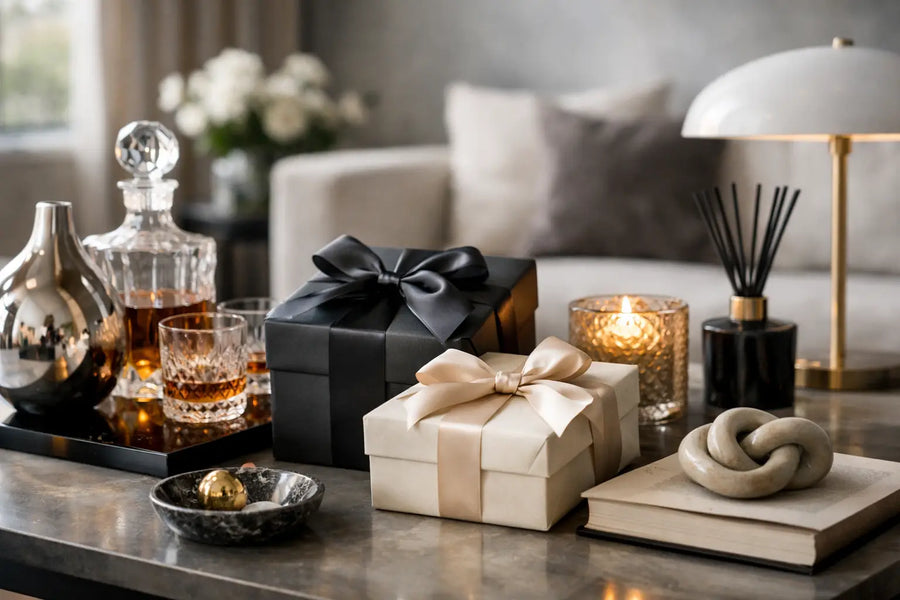
Order is one of the most effective and least expensive decoration decisions. However, tidying up does not mean eliminating all personality. A clear surface can include a beautiful book, a candle, a tray, or a vase. The important thing is that each group of objects seems intentional.
Trays are especially useful on coffee tables, vanities, and entryways because they turn everyday pieces into a curated composition. Decorative boxes and baskets help store remotes, chargers, beauty products, or textiles without breaking the aesthetics of the space.
On open shelves, alternate books, objects of different heights, and small natural elements. Leave some empty gaps. That visual space allows selected pieces to stand out and makes the whole arrangement breathe.
Fewer pieces, better chosen
Premium home decor is not recognized by quantity, but by selection. A tray with a refined finish, cushions with a good drape, or a mirror with a special frame offer a perception of quality that many generic pieces cannot achieve.
It is worth prioritizing items that combine function and visual presence. An ottoman can provide seating, support, and texture. A beautiful organizer resolves clutter. A well-designed lamp adds light and becomes a decorative detail even when turned off.
Buying little by little is an advantage, not a limitation. It allows you to live with each decision, understand what is missing, and choose without rushing. If a piece doesn't improve comfort, order, or aesthetics, it probably doesn't need to enter your home yet.
Textiles and scents to make the space more personal
Textiles soften hard lines and make a room feel finished. In the living room, mix cushions of different sizes within the same color range. Add a blanket folded in a relaxed way, not perfectly stretched. In the bedroom, a lightweight quilt over the bedding and two decorative cushions can completely change the feel of the ensemble.
Curtains also play a decisive role. Placed close to the ceiling and with a wide drape, they streamline windows and visually elevate the room. If you need privacy, choose fabrics that filter light without darkening the space completely during the day.
Scent completes that first impression that isn't always seen, but is remembered. A candle, a diffuser, or a well-chosen room spray can give identity to a corner. Look for fresh and clean fragrances for bathrooms and entryways, or warmer notes for the living room and bedroom. Use them sparingly: sophistication lies in being perceived when one gets close, not in overpowering the environment.
Integrate trends without losing your style
Trends can inspire, but they shouldn't dictate every purchase. Organic shapes, natural finishes, earth tones, and handcrafted objects remain versatile resources because they provide warmth and are easy to combine. Even so, not everything works in every home.
A minimalist style may be ideal for those who need visual calm, but it might feel too cold if you enjoy collecting books, memories, or art. A maximalist environment can look full of life, although it requires more balance to avoid creating a sense of chaos. The decision depends on your habits and how much maintenance you are willing to take on.
To try a trend without compromising the entire decor, introduce it through accessories that are easy to renew: cushion covers, a vase, a table lamp, or a wall piece. It is an intelligent way to keep your home current without losing a timeless aesthetic.
Make every purchase have a purpose
When choosing objects for your home, look beyond the image. Check dimensions, materials, real colors, and how they will fit with what you already have. A spectacular piece can look disproportionate in a small room, while a discreet but well-placed accessory can have a surprising effect.
It is also worth thinking about the shopping experience: selected products, clear information, secure payment, and personalized attention reduce doubts when you are choosing from home. At Belavion, the idea is to bring you stylish and useful pieces so that renovating your space feels as comfortable as enjoying it.
Your home doesn't have to be finished to feel special. Choose one corner today that you use often, remove what is unnecessary, and add a detail that brings light, order, or warmth. That small decision can be the beginning of a house that looks good, but above all, feels completely yours.