
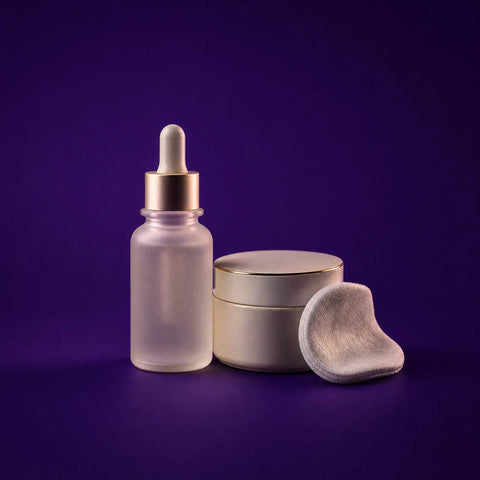



















Ορός βιταμίνης C και ρετινόλης χωρίς ερεθισμό

Luminous skin does not require an endless routine or a collection of open bottles. It needs well-chosen active ingredients and an order that respects its balance. The vitamin C retinol serum brings together two of the most desired ingredients in facial care, but that does not mean you should apply them together without judgment. When used strategically, they can transform dull appearance, uneven texture, and early lines into skin that looks more uniform, fresh, and cared for.
The key lies in understanding what each contributes, when it is best to apply it, and how to advance without causing that sensation of tightness that can make you abandon a routine with great potential. Sophistication is also found in knowing how to choose fewer products, but better decisions.
Vitamin C and retinol serum: what each active does
Vitamin C is an antioxidant that provides a visible effect of luminosity and helps the skin tone look more uniform. It is a great ally if you notice a lack of brightness, a tired appearance, or marks that make the face lose clarity. Well-formulated, it leaves that impression of rested skin that elevates any look, even when you prefer to go out with very little makeup.
Retinol, on the other hand, is a vitamin A derivative recognized for progressively improving skin texture and softening the appearance of fine lines. It can also help pores and blemishes look less obvious. Its result is not immediate: it works best with consistency, gradual application, and a routine that prioritizes skin comfort.
Both actives share a very attractive advantage: they do not just hide issues. With proper use, they contribute to the skin looking more refined as the weeks go by. However, they have different personalities. Vitamin C usually fits very well during the day; retinol is typically reserved for the night.
Can you use vitamin C and retinol in the same routine?
Yes, they can be included in the same general routine, but for most people, it is not necessary to apply both on the same night or mix them in the palm of your hand. Separating them is an elegant and practical way to take advantage of their benefits while reducing the risk of redness, burning, or flaking.
The simplest option is to use vitamin C in the morning and retinol at night. In the morning, vitamin C pairs well with a moisturizer and sunscreen. At night, retinol works within a more minimalist routine, where the skin has time to recover without being exposed to the sun.
There are formulas that combine vitamin C and retinol in the same product, and they can be convenient if they have been designed to offer good tolerance. Even so, they are not the best first choice for sensitive, reactive skin or skin that is completely new to using retinoids. In those cases, controlling each active separately allows you to know clearly what suits your skin.
A practical routine to start safely
If it is your first time incorporating retinol, start with two nights per week, leaving several days of rest between applications. If after two or three weeks your skin remains comfortable, you can increase to three nights per week. There is no prize for going too fast: stable skin usually achieves better results than over-stressed skin.
In the morning, cleanse the face with a gentle product, apply a few drops of vitamin C serum, and follow with moisturizer and broad-spectrum sunscreen. Sunscreen is not an optional detail. Daily exposure can counteract some of the effort dedicated to improving skin tone and, in addition, skin that uses retinol may feel more sensitive to sunlight.
At night, after cleansing, apply a small amount of retinol to completely dry skin. Afterwards, seal it with a moisturizer that provides comfort. If your skin tends to get dry, you can try the sandwich method: a thin layer of moisturizer, retinol, and another layer of cream. It can soften the experience without turning the routine into something complicated.
During the first few days, avoid applying powerful acid-based exfoliants, aggressive physical scrubs, or intensive blemish treatments on the same night. It is not about giving up all your products, but about alternating them. A well-coordinated routine feels more luxurious than a saturated one.
How to choose a serum that is worth it
The packaging, texture, and concentration matter. A vitamin C serum usually keeps better in opaque or dark glass containers, especially if it contains L-ascorbic acid, an effective form that is less stable when exposed to light and air. If your skin is sensitive, formulas with vitamin C derivatives can be a kinder alternative, even if the results may be perceived more gradually.
With retinol, more concentration does not always mean a better choice. A formula with lower intensity, used with discipline, is usually preferable to a strong product that you end up leaving in the drawer due to irritation. Look for pleasant textures, hydrating ingredients, and a format that protects the stability of the formula.
Before trying any product, do a patch test on a small area of the jaw or behind the ear. Wait between 24 and 48 hours to observe the reaction. This step takes little time and can prevent a new routine from becoming a forced pause.
Signs you should slow down
A slight initial adjustment may occur when introducing retinol, but persistent burning, inflammation, marked itching, or intense flaking are not signs you should ignore. Discontinue the active ingredient, simplify the routine with gentle cleansing, hydration, and sunscreen, and reintroduce it later with less frequency if the skin recovers.
It is also advisable to be cautious if you use dermatological treatments, have rosacea, eczema, or an altered skin barrier. In these cases, it is best to consult with a dermatologist before incorporating retinol. During pregnancy or breastfeeding, always consult your healthcare professional before using vitamin A derivatives.
Vitamin C can also cause discomfort in some skin types, especially in high concentrations or when the formula has a more acidic pH. If you feel repeated stinging, try using it on alternate days, applying a moisturizer afterwards, or choosing a milder version. The right routine should not feel like a daily challenge.
Frequently asked questions about vitamin C and retinol
When will results be visible?
The luminosity associated with vitamin C can start to be noticed after several weeks of consistent use. Retinol requires more patience: texture and the appearance of fine lines usually improve gradually over two or three months. Perception changes depending on your skin type, the concentration used, and consistency.
Can I use retinol every night?
It depends on your skin's tolerance and the formula. Some people manage to use it frequently, while others maintain excellent results with two or three nights per week. Do not copy someone else's routine: your skin sets the pace.
Do I need moisturizer if I use serum?
Yes, in most cases. The serum treats a specific need, while the cream helps maintain the hydration and comfort of the skin barrier. This combination is especially valuable when you incorporate retinol.
Choosing a vitamin C and retinol serum is not about chasing an instant promise, but about building a small care ritual that you can maintain. Start gently, protect your skin every morning, and let consistency ensure your face reflects the care you dedicate to it.