

















Jak elegantně a vyvážené dekorovat obývací pokoj

An elegant living room is not recognized by the accumulation of expensive pieces, but by the feeling it produces upon entering: calm, order, and a beauty that feels natural. If you are wondering how to decorate a living room with elegance, start by looking at the space as a whole, not as a sum of furniture. The layout, the light, and the proportions carry as much weight as the sofa, the table, or the accessories.
Real elegance should also be lived in. A living room designed for entertaining, relaxing, or sharing an afternoon with family needs to be comfortable and functional. The goal is not to create an untouchable room, but a home with presence, where every detail has a reason and no element competes unnecessarily for attention.
How to decorate a living room with elegance through layout
Before choosing colors or textiles, define how the living room will be used. Is it a large space for gatherings, a small room for daily use, or a room open to the dining area? The answer determines what furniture you need and, above all, how much free space you should preserve.
The sofa usually marks the starting point. In rectangular living rooms, placing it against the main wall or next to a window, without blocking the light, helps create a clear composition. In larger spaces, you can use the sofa itself to visually separate the seating area from the dining room or the entryway.
Avoid placing all furniture against the walls out of habit. If dimensions allow, pulling the sofa or armchairs a few inches away from the wall adds depth and makes the living room look more considered. Leave comfortable paths between the main pieces: clear circulation is one of the most discreet ways to convey quality.
A coffee table must respect the scale of the sofa. Too small and it will look lost; too large and it will make movement uncomfortable. As a practical reference, leave between 16 and 18 inches between the sofa and the table, enough to rest a drink without sacrificing comfort. If the living room is compact, two light side tables can be more elegant and versatile than a bulky central table.
Build a serene palette, not a flat living room
Neutral tones are a safe base for a sophisticated living room, but neutral does not mean boring. Off-white, sand, taupe, warm gray, cream, or beige create a bright background that allows you to play with materials and accents without tiring the eyes. In the United States, where open living rooms and natural light often play a central role, these ranges help connect the living room with the rest of the house.
Choose a dominant color for the walls, sofa, or rug, and add one or two supporting tones. A soft olive green, ink blue, muted terracotta, or deep burgundy can add character to pillows, an armchair, or a decorative piece. The key is to repeat the accent in at least two points in the living room so it is perceived as an aesthetic decision rather than an isolated detail.
If the space receives little light, it is advisable to prioritize light bases and add depth with wood, aged metal, or textured textiles. If, on the other hand, there is plenty of sunlight, you can afford more intense tones on a wall, curtains, or upholstery. Elegance depends on balance: a very bright room needs contrast; a dark one needs reflections, lighting, and surfaces that relieve its visual weight.
Texture is what makes a neutral look luxurious
When the palette is sober, materials become the stars. Combine a low-pile or dense-weave rug with pillows in bouclé, washed linen, velvet, or high-drape cotton. Add a wooden table with visible grain, a metallic tray, or a matte ceramic vase.
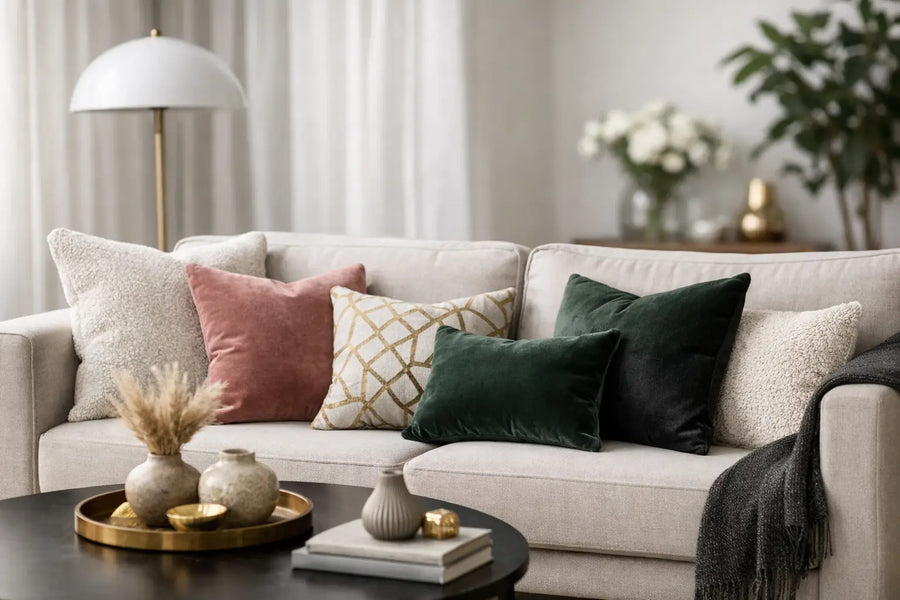
You don't need to introduce all the textures at once. Two or three well-chosen materials achieve a more refined appearance than an excessive mixture of sparkles, prints, and finishes. A beige sofa gains presence with dark green and cream pillows, a soft-textured throw, and a black or dark wood side table.
Invest where it is most noticeable: sofa, rug, and lighting
There are pieces that hold the entire perception of the living room. The sofa is one of them because it takes up a lot of volume and is used every day. Prioritize a timeless silhouette, pleasant upholstery, and a color you can live with for years. Soft curved lines, slim arms, and visible legs can add lightness, while a deep, straight design offers a more contemporary image.
The rug also defines the level of finish. It should be large enough so that at least the front legs of the sofa and armchairs rest on it. A small rug fragments the space and makes even nice furniture look disconnected. If you prefer a patterned design, look for discreet patterns or tones that converse with the general palette.
Lighting deserves its own strategy. An attractive ceiling lamp provides identity, but it shouldn't be the only source of light. Combine ambient light with floor and table lamps to create different scenes: clear lighting for reading or hosting guests, and softer lighting for quiet evenings.
Warm bulbs, around 2700 K, usually favor skin tones, wood, and textiles. Place a table lamp on a console, sideboard, or side table to illuminate lower layers. This simple gesture avoids harsh shadows and gives the living room that cozy effect of a carefully designed space.
Decorate with intention: fewer, better-chosen pieces
Accessories add personality, but they are also where visual clutter appears. Instead of filling every surface, select objects with presence: an art book, an elegant tray, a candle, a ceramic piece, and a natural arrangement can be enough to dress a coffee table.
Group objects in compositions of varying heights. For example, a tall vase, a low candle, and a horizontal book create a more interesting scene than three elements of the same size. Leave empty areas around them: that visual air is part of the luxury.
Walls also need a pause. A large piece of art, a framed photograph, or a generously proportioned mirror usually has more impact than a wall saturated with small pictures. The mirror is especially useful if you want to expand the feeling of light, but it must reflect something pleasant, like a window, a lamp, or a decorative composition, not a messy corner.
Plants provide life and soften the lines of a modern living room. A tall plant in a sober pot can fill an empty corner with more elegance than an additional piece of furniture. If you don't have good natural light or prefer minimal maintenance, dried branches, preserved eucalyptus, or realistic-looking artificial arrangements can work very well if used with discretion.
Curtains and the details that change the result
Curtains often decide whether a living room is perceived as finished. Install the rod a few inches above the window frame and, if possible, extend it to both sides. This makes the window look wider and allows more light to enter when the curtains are open.
Choose fabrics that reach almost to the floor or graze it slightly. Linen, cotton blends, and fabrics with a good drape provide a relaxed and distinguished feeling. Curtains that are too short or made of stiff fabrics can detract from harmony, even if the rest of the decor is well executed.
Pay attention to the finishes you touch every day: a pleasant throw, well-fitted pillow covers, a tray to organize remote controls, and a nice basket to store textiles. These are practical details that protect the aesthetic without making the living room less livable.
Avoid these mistakes even if you have nice furniture
The rush to complete the living room often leads to buying too quickly. An identical set of sofa, table, and sideboard may be easy to choose, but it often causes the space to lose personality. Mixing pieces with a common logic, such as color, scale, or material, creates a more refined result.
Another common mistake is using too many pillows or small ornaments. Pillows should invite you to sit down, not force you to remove them before doing so. It is also advisable to hide cables, organize shelves, and review what remains in sight on tables and furniture. Elegance does not require rigid perfection, but it does require a sense of control.
Finally, don't chase every trend. A living room with a timeless base allows you to refresh the atmosphere with a pillow cover, a lamp, a vase, or a textile piece, without replacing the essentials. Choosing calmly gives you a more personal space and a more satisfying purchase.
Your living room doesn't need to look like a showroom to feel special. When the light is right, the furniture breathes, and the objects you choose speak to your style, elegance stops being a formula and becomes a very comfortable way to be at home.